
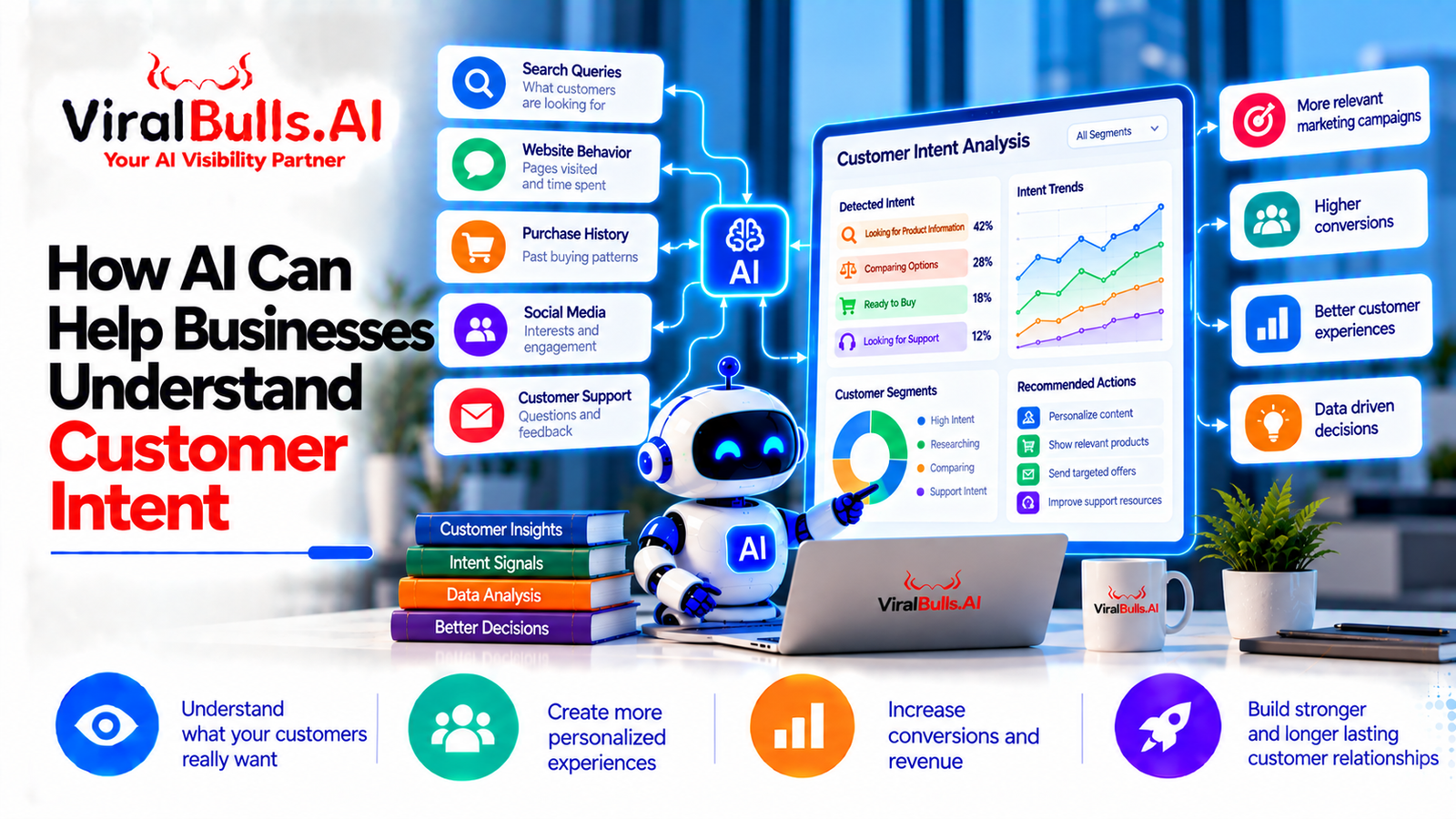
Imagine walking into a store where the salesperson already knows why you came in. Not just what you looked at, but whether you’re browsing, comparing prices, or ready to buy today. You’d feel understood, and you’d probably buy. That’s the promise of AI for understanding customer intent, and it’s no longer reserved for tech giants.
Every click, search, scroll, and chat message your customers leave behind is a clue about what they want. The challenge has always been making sense of millions of those clues at once. Artificial intelligence can do exactly that, turning scattered digital signals into clear, actionable insight. In this guide, you’ll learn what customer intent is, how AI decodes it, and how you can put it to work in your business.
What Is Customer Intent, and Why Does It Matter?
Customer intent is the underlying goal behind a person’s action. When someone types “best CRM for small teams” into Google, they aren’t just looking for a list of software. They’re researching, comparing, and moving toward a decision. Intent is the “why” behind the “what.”
Marketers generally group intent into three broad types:
- Informational intent: the customer wants to learn (“what is email automation?”).
- Commercial intent: the customer is comparing options before buying (“top 5 project management tools”).
- Transactional intent: the customer is ready to act (“buy running shoes online”).
Why does this matter? Because the right message at the wrong stage wastes money. Pushing a discount code to someone who’s still learning feels pushy. Sending a long educational article to someone ready to buy creates friction. Understanding intent lets you meet people exactly where they are.
Why Traditional Methods Fall Short
For years, businesses relied on surveys, focus groups, and basic analytics to guess what customers wanted. These methods still have value, but they come with real limitations:
- They’re slow. By the time you analyze survey results, customer preferences may have already shifted.
- They’re limited in scale. A focus group of 20 people can’t represent thousands of buyers.
- They rely on what people say, not what they do. Customers often can’t articulate their own motivations.
AI closes these gaps by analyzing real behavior, in real time, at massive scale.
How AI Decodes Customer Intent
AI doesn’t read minds, but it comes surprisingly close by recognizing patterns humans would never spot. Here are the core technologies working behind the scenes.
1. Natural Language Processing (NLP)
NLP allows AI to understand human language the way people actually use it, including slang, typos, and vague phrasing. It analyzes search queries, chatbot conversations, emails, reviews, and social media comments to identify what a customer is really asking for. A message like “my order still hasn’t shown up” is instantly flagged as a delivery concern, even though the word “delivery” never appears.
2. Machine Learning and Behavioral Analysis
Machine learning models study how customers move through your website or app: which pages they visit, how long they stay, what they add to their cart, and where they drop off. Over time, the system learns which behaviors signal a high likelihood of purchase and which signal hesitation.
3. Predictive Analytics
Predictive models use historical data to forecast what a customer is likely to do next, whether that’s buying, churning, upgrading, or ignoring your emails altogether. This helps you act before the moment passes rather than react after it’s gone.
4. Real-Time Personalization Engines
These systems combine all of the above to adjust what each visitor sees instantly, from product recommendations to headlines, offers, and even the timing of your follow-up messages.
Practical Ways Businesses Use AI to Understand Intent
The best part about AI-driven intent analysis is how flexible it is. Here’s how different teams are putting it to work.
Smarter Marketing and Advertising
AI segments audiences by intent rather than just demographics. Instead of targeting “women aged 25 to 34,” you can target “people actively comparing skincare routines this week.” That precision improves ad relevance, lowers cost per click, and lifts conversion rates.
SEO and Content Strategy
Search engines increasingly reward content that matches search intent. AI tools analyze the keywords and questions your audience uses, then reveal whether they want a guide, a comparison, or a product page. This helps you create content that ranks well and genuinely satisfies readers, which is a major advantage as AI-driven search experiences continue to grow.
E-commerce Recommendations
Recommendation engines learn from browsing and purchase patterns to suggest products a shopper is genuinely likely to want. This is why the “you might also like” section often feels uncannily accurate, and why it drives a meaningful share of online revenue.
Customer Support and Chatbots
AI-powered chatbots detect the intent behind a question and route it to the right answer or the right human agent. Frustrated customers can be escalated faster, while simple requests get resolved in seconds, at any hour.
The Benefits of Using AI to Understand Customer Intent
- Higher conversion rates: relevant messages reach people at the right moment.
How to Get Started: A Simple Roadmap
You don’t need a massive budget or a data science team to begin. Follow these steps.
- Define your goals. Decide what you want to improve, whether that’s lead quality, cart abandonment, or support response times.
- Gather your data. Collect information from your website analytics, CRM, email platform, social channels, and customer conversations.
- Choose the right tools. Many affordable platforms now include intent analysis, from AI-powered analytics and chatbots to CRM tools with predictive lead scoring.
- Start small. Pilot one use case, such as personalized email flows or chatbot routing, and measure the results.
- Test, learn, and refine. AI improves with feedback. Review performance regularly and adjust your strategy accordingly.
Common Challenges and How to Overcome Them
AI is powerful, but it isn’t magic. Keep these considerations in mind:
- Data quality matters. Messy or incomplete data leads to misleading conclusions. Clean your data before you analyze it.
- Privacy comes first. Be transparent about data collection and comply with regulations such as GDPR and India’s Digital Personal Data Protection Act. Trust is your most valuable asset.
- Keep the human touch. AI should inform your decisions, not replace empathy and creativity. The best results come from combining machine insight with human judgment.
Turn Insight Into Action
Understanding customer intent has always separated good businesses from great ones. What’s changed is that AI puts that understanding within reach of teams of every size. When you know what your customers want before they say it, you can answer their questions faster, solve their problems sooner, and earn their loyalty for longer.
The businesses that thrive ahead will be the ones that listen best. Start by picking one touchpoint, whether that’s your website, your emails, or your support inbox, and let AI show you what your customers have been trying to tell you all along.
Ready to make your marketing smarter? Connect with the Viralbulls AI team to discover how intent-driven strategies can help your brand attract, engage, and convert the right audience.
Frequently Asked Questions (FAQs)
1. What does customer intent mean in marketing?
Customer intent is the goal or motivation behind a customer’s action, such as searching a keyword, visiting a page, or messaging your brand. It tells you whether someone is learning, comparing, or ready to buy.
2. How does AI identify customer intent?
AI uses natural language processing, machine learning, and behavioral analysis to study search queries, clicks, browsing patterns, chats, and reviews. It then detects patterns that indicate what a customer wants and how close they are to making a decision.
3. Is AI-based intent analysis only for large companies?
Not at all. Many affordable tools, including CRM platforms, chatbots, and analytics software, now include intent features. Small and mid-sized businesses can start with one use case and scale as results come in.
4. Can AI intent analysis improve my SEO?
Yes. AI helps you understand the intent behind the keywords your audience uses, so you can create the right content type, whether that’s a guide, comparison, or product page. Matching search intent is a key factor in ranking well and keeping visitors engaged.
5. Is it safe to use customer data for intent analysis?
It is when done responsibly. Collect only the data you need, be transparent with customers, secure your data properly, and follow applicable privacy laws. Ethical data use builds trust and protects your brand.