
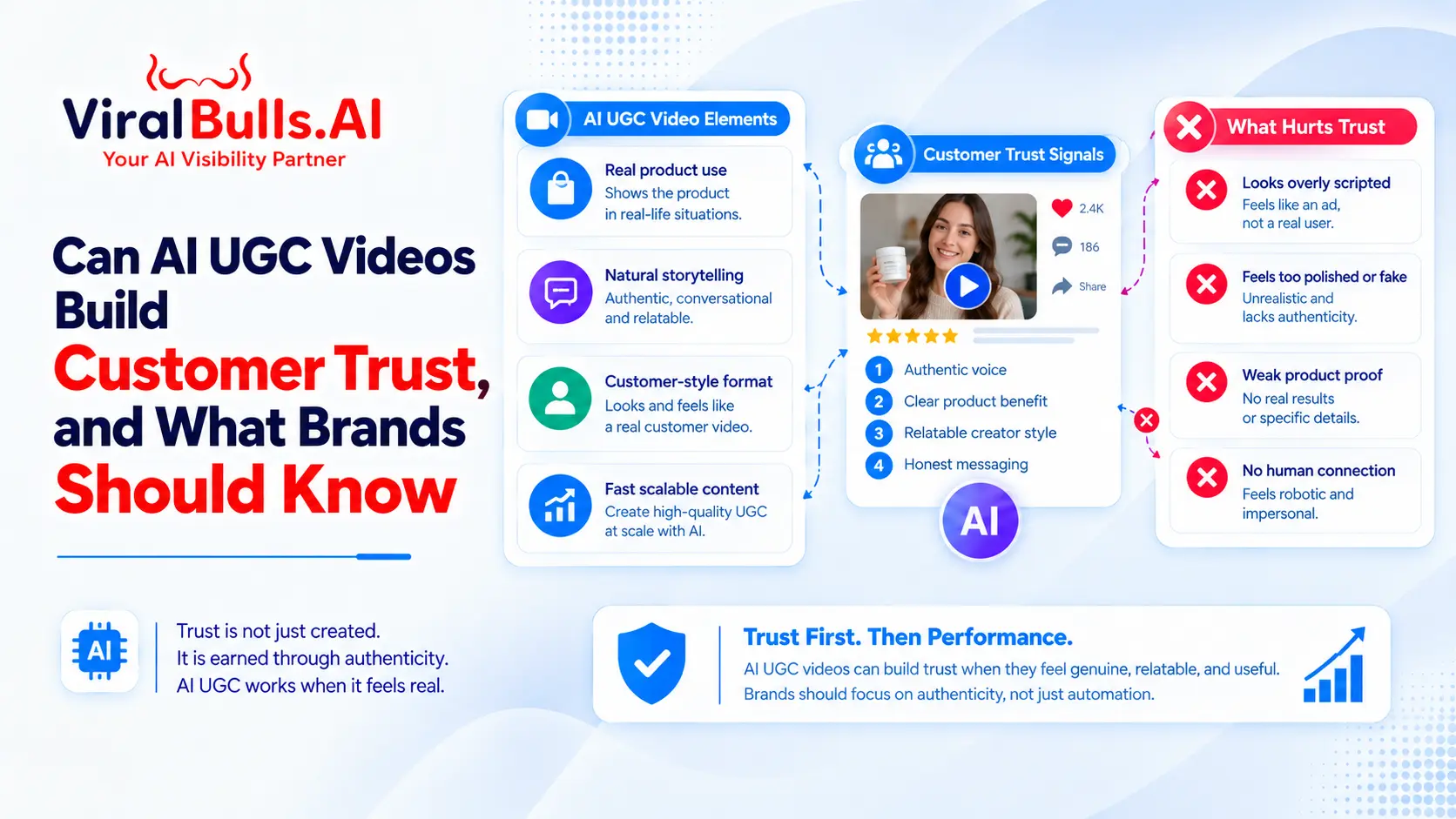
A person appears on screen, describes a common problem, holds up a product, and explains why it works.
The framing feels casual. The language feels personal. The viewer may assume the speaker is a real customer sharing a real experience.
But the person may be synthetic, the voice generated, and the script written by the brand.
AI UGC can create fast, persuasive video content. Whether it builds trust depends on how the brand uses it. Synthetic content can explain, demonstrate, and entertain. It should not manufacture customer experience.
Why UGC Is Associated with Trust
User-generated content became valuable because it offered a perspective outside the brand’s polished advertising voice.
Real customers show products in ordinary settings, use familiar language, mention practical details, and sometimes acknowledge limitations. That can reduce perceived risk because the content appears grounded in experience.
UGC is not trusted merely because it looks informal. It is trusted when the person has a credible relationship to the product and the message feels honest.
What AI UGC Changes
AI UGC recreates the visual grammar of creator content: direct-to-camera delivery, short hooks, problem-solution scripts, captions, product shots, and conversational calls to action.
It allows brands to produce more versions, test messages quickly, localize campaigns, and reduce dependence on creator availability.
The risk appears when the style of a testimonial is used to imply a real experience that never happened. A synthetic presenter saying, “I used this for thirty days and it changed my skin,” creates a very different trust issue from a presenter explaining how the product is designed to be used.
Where AI UGC Can Build Legitimate Trust
Clear Product Education
AI presenters can explain features, usage steps, comparisons, policies, or common questions using approved information.
Consistent Brand Communication
A controlled presenter can deliver accurate messages across campaigns and markets without changing key claims.
Accessible and Localized Content
Brands can adapt language, pacing, captions, and versions for different audiences, making information easier to understand.
Fast Response to Customer Questions
Frequently asked questions can be turned into short videos while the subject remains relevant.
Trust grows when the content is useful, accurate, and appropriately framed.
Where AI UGC Damages Trust
- Inventing a customer, review, or personal product outcome
- Using a synthetic face to imply independent endorsement
- Making health, financial, or performance claims without evidence
- Hiding material sponsorship or brand control
- Using a real person’s likeness or voice without permission
- Creating unrealistic before-and-after stories
- Producing large volumes of repetitive low-quality content
The FTC’s consumer review and testimonial rule prohibits fake or false testimonials, including content that misrepresents a person who does not exist as having real experience. The rule does not create a blanket ban on virtual influencers, but truthfulness remains central.
Trust Requires More Than a Disclosure Label
Disclosure can help viewers understand that content was generated or materially edited with AI. Platforms may also add information to some ads detected as AI-generated.
But a label cannot make a false claim acceptable. A disclosed synthetic testimonial is still problematic if it invents an experience or outcome.
Brands need to review the underlying message: Is the presenter explaining, dramatizing, endorsing, or claiming personal use? The more the message resembles an endorsement, the more important evidence and clear context become.
How to Write Trustworthy AI UGC Scripts
Use language that accurately describes the presenter’s role.
Instead of “I tried this and loved it,” use “Here is what this product is designed to do” or “If you struggle with this problem, these are the features to look at.”
Replace exaggerated certainty with supportable explanation. Avoid universal outcomes, invented timeframes, and unsupported superiority claims.
Give viewers enough information to evaluate the offer. Pricing conditions, usage requirements, eligibility, limitations, and important product details should not be hidden behind a casual delivery style.
Use Real Proof Around Synthetic Presentation
AI UGC becomes more credible when it is supported by real evidence.
A video can include verified product demonstrations, real interface recordings, approved customer quotes, documented case results, ingredient or specification information, and links to detailed proof.
Real customer UGC can also sit alongside AI-generated explainers. The AI content introduces the problem or product, while genuine customers provide lived experience.
This division of roles is more trustworthy than asking a synthetic presenter to imitate every part of the customer journey.
How AI Video Marketing Should Be Measured
High view-through rates do not prove trust. A controversial or misleading video can hold attention while damaging the brand.
Measure qualified clicks, conversion quality, comments, negative feedback, return rates, customer-service questions, and brand sentiment. Compare AI UGC with real creator content and polished brand creative.
Creative testing should identify not only which video converts, but which message attracts the right customer with accurate expectations.
A Responsible AI UGC Framework
- Define whether the presenter is an explainer, actor, avatar, founder clone, or endorser.
- Obtain consent for every real identity, voice, or likeness used.
- Prohibit fabricated personal experience and unsupported outcomes.
- Create disclosure rules based on context, platform, and jurisdiction.
- Review scripts for advertising, product, and industry compliance.
- Combine synthetic delivery with real demonstrations and evidence.
- Monitor customer response and stop formats that create confusion.
How ViralBulls Creates AI UGC Without Sacrificing Credibility
ViralBulls builds AI UGC around accurate positioning and a defined creative role.
We develop hooks and scripts for paid advertising, product education, localization, and campaign testing. We distinguish between explanations, dramatizations, founder messages, and customer endorsements so the content does not make claims the presenter cannot honestly support.
Our AI video marketing process includes brand review, message controls, variation planning, editing, and performance analysis. Where a real customer story is required, we recommend real UGC rather than manufacturing one.
Final Thought: Trust Comes from the Truth Behind the Format
AI UGC can support trust when it makes information clearer, more accessible, and easier to evaluate.
It weakens trust when it borrows the appearance of customer experience without the reality behind it.
Brands should use AI to scale communication, not to counterfeit credibility. The format may be synthetic, but the claims, evidence, and intent must remain real.
Trustworthy vs Risky AI UGC
| Trustworthy Use | Risky Use |
|---|---|
| Explains verified product features | Invents personal product experience |
| Uses an authorized presenter or avatar | Copies a real person without permission |
| Supports claims with evidence | Makes unsupported outcome claims |
| Clarifies sponsorship or synthetic context where needed | Creates the impression of independent endorsement |
| Combines AI with real demonstrations | Uses generated visuals as fake proof |
| Measures customer quality and sentiment | Optimizes only for clicks or watch time |
Choosing the Right Products and Campaigns for AI UGC
AI UGC is easier to use responsibly for products that can be explained through objective features, visible interfaces, straightforward demonstrations, or low-risk everyday benefits.
It requires greater caution when the purchase depends on subjective experience, long-term outcomes, health effects, financial results, or emotional transformation. In these categories, audiences need real evidence and clear limitations, not just persuasive delivery.
Campaign intent also matters. Awareness content can use dramatized problems and educational scripts. Conversion content often needs stronger proof, detailed product information, customer reviews, guarantees, and transparent conditions. The closer the viewer is to buying, the more carefully the brand should support every claim.
Frequently Asked Questions
Yes, when it provides accurate information, uses authorized identities, and does not fabricate customer experience. Trust depends on the truth behind the message.
Virtual presenters are not universally prohibited, but brands must comply with truth-in-advertising, endorsement, privacy, intellectual-property, and platform requirements.
A brand should not present a synthetic person as a real customer who used the product. An avatar can explain or dramatize a message when its role is clear and claims are accurate.
Disclosure obligations vary. Brands should follow applicable rules and platform policies, and should disclose when failing to do so would mislead a reasonable viewer.
Real UGC is stronger for genuine experience and proof. AI UGC is stronger for scale, localization, and controlled explanations. Many campaigns should use both.
Monitor comments, negative feedback, conversion quality, cancellations, returns, support questions, repeat purchases, and brand sentiment in addition to media metrics.